The short answer
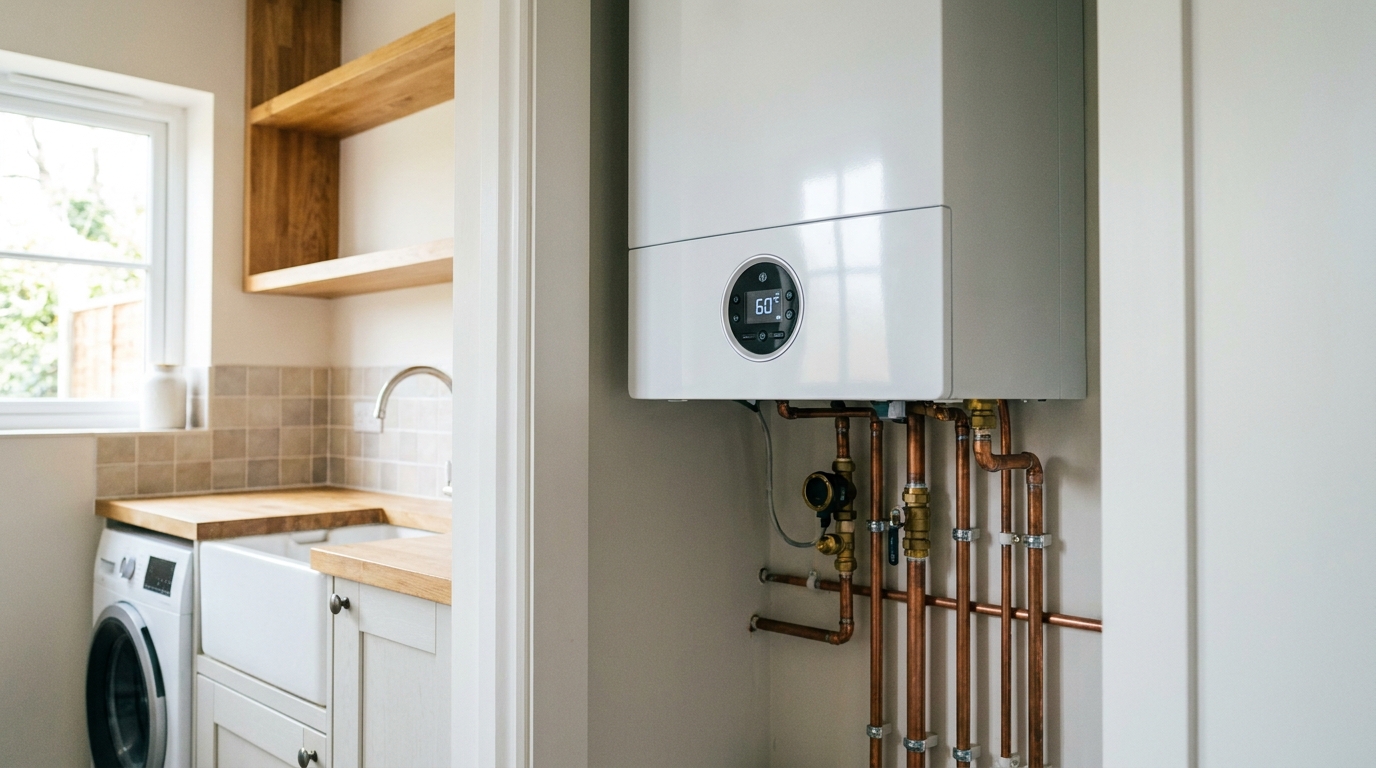
A system boiler heats water for both central heating and a separate insulated hot-water cylinder, drawing cold water directly from the mains rather than a loft tank. It suits larger homes with two or more bathrooms where several people need hot water at the same time. There is no cold-water tank in the loft, but you do need space for a cylinder — typically in an airing cupboard. For a full comparison see combi vs system vs regular boiler.
System boilers occupy the middle ground between a simple combi and a traditional regular boiler. They combine the modern sealed-system approach — no loft tank, mains-pressure supply — with the practical benefit of stored hot water for homes with higher demand. Understanding what makes a system boiler different from both alternatives helps you judge whether a conversion makes sense for your home, or whether you are being steered toward unnecessary work.
System boiler at a glance
- Hot-water supply Stored in a cylinder — ready on demand
- Cold-water feed Directly from the mains (no loft tank)
- Cylinder needed? Yes — typically 150–300 litres
- Best for 2+ bathrooms, high morning demand
- Not ideal for Small flats & homes with 1 bathroom
- Pressure Full mains pressure throughout
How a system boiler differs from a combi
The key difference is storage. A combi heats water on demand as it passes through an internal heat exchanger; a system boiler heats water and stores it in a separate cylinder so that hot water is available immediately and at full mains pressure, regardless of the boiler’s instantaneous output. That stored volume means two or three people can shower back-to-back without the flow rate dropping, which is the practical limitation of a combi boiler in a busy household. The cylinder is heated in a scheduled or on-demand cycle: the boiler fires up, heats the stored water to typically 60°C, and then the boiler shuts off until temperature drops or another heating cycle is called. See how this compares more broadly in our boiler types guide.
How a system boiler differs from a regular boiler
Both need a cylinder, but the critical difference is the loft. A regular (heat-only) boiler feeds its system via a cold-water feed-and-expansion tank in the loft; a system boiler is fully sealed and takes cold water directly from the mains at full pressure. This removes the need for loft pipework, the loft tank (and the risk of it leaking or freezing), and the low gravity-fed pressure that old regular-system properties often suffer in the shower. A system boiler is, in effect, a modernised regular boiler — same stored-cylinder principle, better pressure, simpler pipework.
| Feature | System boiler | Regular boiler | Combi boiler |
|---|---|---|---|
| Cylinder | Yes | Yes | No |
| Loft tank | No | Yes | No |
| Mains pressure | Yes | No (gravity-fed) | Yes |
| Hot water at once | High | High | Lower |
| Loft space saved? | Yes | No | Yes |
What size cylinder do you need?
Cylinder sizing depends on the number of people in the household and morning peak demand. A rough guide is 40–50 litres of stored hot water per person, so a four-person household typically needs a 150–200-litre cylinder. Cylinders come in standard sizes: 120, 150, 180, 210 and 250 litres are common. A direct cylinder is heated solely by the boiler; an indirect cylinder has an immersion heater as well, which can serve as a backup or be used for Economy 7 tariff heating overnight. Modern cylinders are well-insulated and lose heat slowly, but if the cylinder is more than 15 years old it may be poorly insulated and worth replacing at the same time as the boiler.
Running costs and efficiency
Modern system boilers are condensing type and achieve 90–94% efficiency, the same as a modern combi. The main running-cost difference is heat loss from the cylinder: even a well-insulated modern cylinder loses some heat over time, so you are paying to maintain stored water at temperature. This is why a properly scheduled heating programme — heating the cylinder only when demand is expected — matters more with a system boiler than with a combi. A good programmer or smart thermostat can significantly reduce this standing loss. If you want to understand the full cost of installation, see our installation cost breakdown and the broader new boiler cost guide. This page is general information; all gas and heating work should be carried out by a Gas Safe registered engineer.
Frequently asked questions
Does a system boiler need a hot-water cylinder?
Yes. A system boiler always works with a separate insulated hot-water cylinder. If you do not have space for a cylinder, a combi boiler may be more practical.
Is a system boiler better than a combi?
For larger homes with two or more bathrooms and high morning demand, a system boiler with a cylinder typically performs better because stored hot water is available at full pressure for multiple simultaneous users. For smaller homes with lower demand, a combi is often simpler and more space-efficient.
Does a system boiler need a loft tank?
No. Unlike a regular boiler, a system boiler takes cold water directly from the mains, so no loft tank is needed. This is one of its practical advantages over a regular (heat-only) boiler.
How long does a system boiler last?
A well-maintained system boiler typically lasts 10–15 years, similar to a combi. Annual servicing by a Gas Safe registered engineer is recommended to maintain efficiency, check components and keep any manufacturer warranty valid.
Sources & further reading
- Gas Safe Register — installation and safety requirements for system boilers
- Energy Saving Trust — hot-water cylinders and system boiler efficiency
- HHIC — Heating and Hotwater Industry Council, system boiler and cylinder consumer guidance
- GOV.UK / Building Regulations Approved Document G — sanitation, hot water safety and water efficiency
This is general information, not advice for your specific property or installation. Costs, timescales and outcomes vary with your home, system condition and chosen engineer. All gas boiler work must be carried out by a Gas Safe registered engineer.