The short answer
A combi boiler heats water on demand with no cylinder or tank — ideal for smaller homes with one bathroom. A system boiler heats water and stores it in a separate cylinder, suiting homes with higher simultaneous hot-water demand. A regular (heat-only) boiler works with both a cylinder and a cold-water tank in the loft, and is typical of older heating systems. For guidance on costs, see new boiler costs.
Choosing the right boiler type before you choose a brand or model is the most important decision in a boiler replacement. The wrong type can mean you run out of hot water in the morning, waste space on a cylinder you don’t need, or spend money converting pipework unnecessarily. A Gas Safe registered engineer will advise based on your home’s layout and usage, but understanding the differences helps you arrive at that conversation ready to ask the right questions.
Boiler types at a glance
- Combi boiler Heats water on demand, no cylinder needed
- System boiler Stores hot water in a cylinder — no loft tank
- Regular (heat-only) Needs cylinder AND cold-water loft tank
- Best for combis 1–2 bathrooms, lower simultaneous demand
- Best for system 2+ bathrooms, high morning peak
- Best for regular Replacing like-for-like, older systems
How a combi boiler works
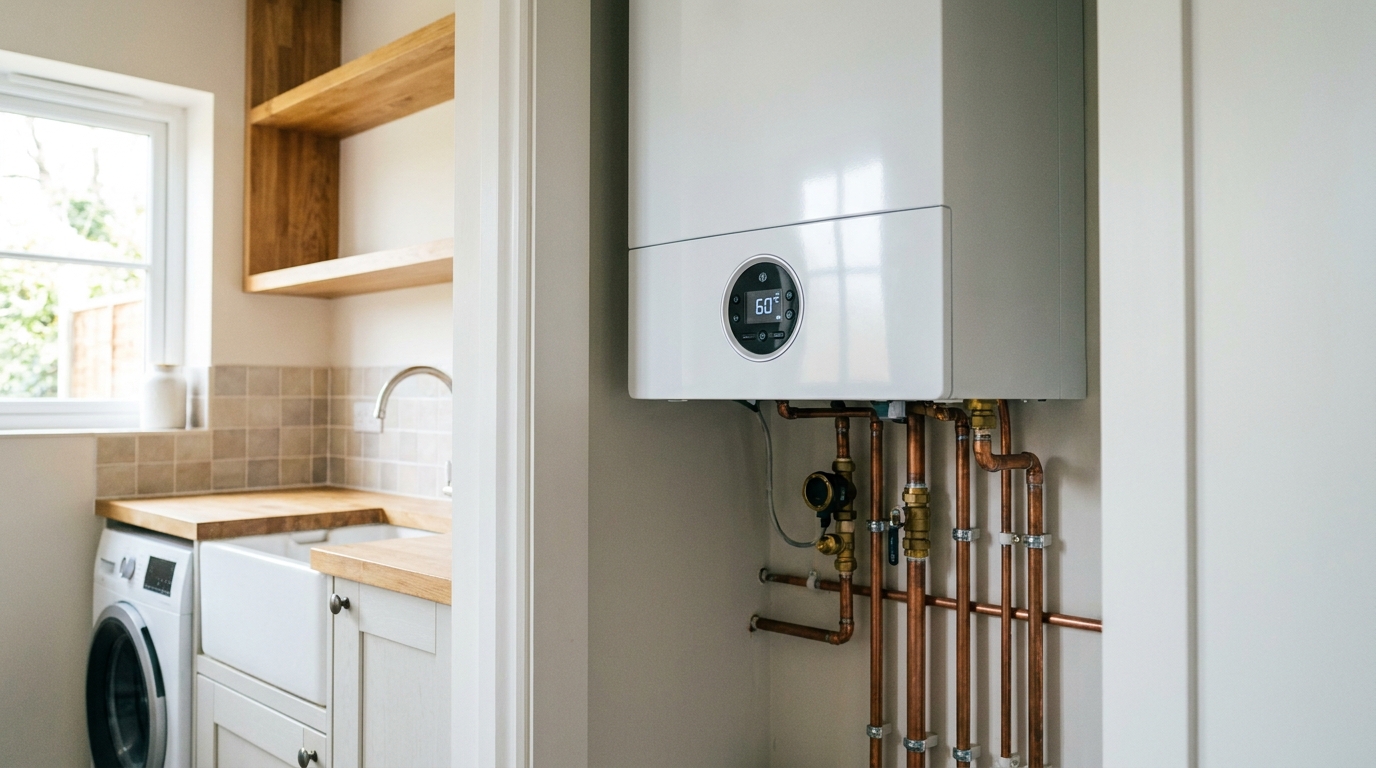
A combination boiler does two jobs in one unit: it heats your central-heating radiators via a primary circuit, and it heats domestic hot water on demand by passing cold mains water through an internal heat exchanger when a tap is opened. Because it works on demand, there is no need for a hot-water cylinder or a cold-water tank in the loft. That saves space, reduces the number of pipework connections and removes the risk of a tank leaking in the loft. The trade-off is that a combi can only heat water at the rate its output allows — if you open two taps or a shower and a bath simultaneously, the flow rate to each drops. See our guide on how a combi boiler works for the internal detail.
How a system boiler works
A system boiler (sometimes called a sealed-system boiler) heats water for both radiators and a separate insulated hot-water cylinder. Unlike a regular boiler, it draws cold water directly from the mains rather than from a loft tank, so the loft space stays clear. The cylinder stores a volume of heated water — typically 150–300 litres — that is ready for immediate use at full mains pressure. This suits homes where two or more people might want hot water at the same time, because you are drawing down a stored volume rather than relying on instant heating. The downside is that the cylinder takes up cupboard space (usually an airing cupboard) and once the stored volume is exhausted you wait for it to reheat — typically 20–40 minutes.
| Feature | Combi | System | Regular |
|---|---|---|---|
| Cylinder needed? | No | Yes | Yes |
| Loft tank needed? | No | No | Yes |
| Hot-water supply | On demand | Stored (cylinder) | Stored (cylinder) |
| Simultaneous demand | Lower | High | High |
| Typical home | 1–2 bed, 1 bathroom | 3–5 bed, 2+ bathrooms | Older property, existing system |
How a regular (heat-only) boiler works
A regular boiler — also called a heat-only, conventional or traditional boiler — heats water and sends it to both the radiators and a hot-water cylinder, but it also relies on a cold-water feed-and-expansion tank in the loft to maintain the system’s water supply. This is the oldest and most common configuration found in UK homes built before the 1990s. It suits large homes where the cylinder and pump arrangement already exists and where converting to a combi or system would mean significant pipework changes. It is also the only sensible option when the existing system has been designed around gravity-fed hot water. If your current boiler is a regular type, replacing it like-for-like is usually the least-disruptive option unless there is a good reason to convert.
Which type is right for your home?
A combi is usually the right answer for flats and smaller homes with one bathroom and a gas supply capable of maintaining good mains pressure. A system boiler suits families in larger homes with two or more bathrooms where morning demand is high — the stored cylinder means everyone gets a proper shower even if it is back-to-back. A regular boiler is most often the right answer when you are replacing an existing regular system and the pipework and cylinder are in good condition; converting the whole system to a combi or sealed system may not repay the extra cost. Your Gas Safe engineer should confirm which type is appropriate after assessing your home’s layout, pipework and usage. See boiler sizing for the next step, and compare boiler quotes once you have confirmed the type. This is general guidance, not a specification; always consult a Gas Safe registered engineer for your specific home.
Frequently asked questions
Is a combi boiler better than a system boiler?
Neither is universally better. A combi suits smaller homes with one bathroom and modest hot-water demand. A system boiler with a cylinder suits larger homes where multiple people need hot water simultaneously. The right choice depends on your home.
Can I replace a regular boiler with a combi?
Yes, but it involves removing the cylinder, removing or capping the loft tanks, and re-routing some pipework. This conversion typically adds £300–£700 to the installation cost and is most worthwhile when you have unused cylinder space or want to simplify the system.
Do combi boilers run out of hot water?
A combi does not run out because it heats water on demand, but its flow rate is limited by its output. If two high-flow outlets run simultaneously, each gets a reduced flow. For high simultaneous demand, a system boiler with a cylinder is more practical.
What is the most common boiler type in the UK?
Combination boilers are now the most commonly installed type in UK homes, partly because they do not need a cylinder or loft tank. Regular boilers remain common in older properties where the existing system suits them.
Sources & further reading
- Gas Safe Register — guidance on boiler types and installation requirements
- Energy Saving Trust — which boiler is right for your home
- GOV.UK / Building Regulations Approved Document L — conservation of fuel and power
- HHIC — Heating and Hotwater Industry Council, consumer guidance on boiler types
This is general information, not advice for your specific property or installation. Costs, timescales and outcomes vary with your home, system condition and chosen engineer. All gas boiler work must be carried out by a Gas Safe registered engineer.